Aspects of School Health Services: A Complete Guide
Key Takeaways
- School health services support students’ physical, mental, emotional, and nutritional well-being.
- Regular health screenings and preventive care help identify and address health concerns early.
- First aid and emergency care ensure timely support during medical situations.
- Nutrition and mental health services promote healthier, happier, and more focused students.
- Health education and a safe school environment encourage lifelong healthy habits.
- Digital health records help schools monitor student health and coordinate care effectively.
- An integrated healthcare approach helps schools provide comprehensive and student-focused health support.
School health services encompass a comprehensive, planned set of strategies and interventions designed to promote, protect, and maintain the physical, mental, and emotional well-being of students and school personnel.
A child’s well-being plays an important role in their ability to learn, participate, and develop confidently at school. School health services provide a structured approach to supporting students’ physical, mental, emotional, and nutritional needs within the school environment. These services go beyond treating illnesses. They focus on early detection, prevention, health education, emergency support, and creating a safe environment where children can thrive.
From routine health screenings and first aid to mental health support and nutritional guidance, different aspects of school health services work together to promote overall well-being. A well-planned school health programme can also help identify health concerns at an early stage and encourage healthy habits that children can carry into adulthood.
What Are School Health Services?
School health services are organised healthcare and wellness programmes designed to protect and improve the health of students within an educational setting. They may include regular health assessments, vision and hearing screenings, vaccinations, first aid, nutritional support, mental health assistance, health education, and preventive care.
These services are generally delivered through collaboration between schools, healthcare professionals, parents, teachers, and other support staff. Their purpose is not limited to managing health problems after they occur. They also encourage prevention, early identification, healthy behaviour, and timely medical intervention.
By bringing essential health support closer to children, schools can create an environment where students feel safer and are better equipped to focus on their education. This integrated approach makes healthcare an important part of a child’s overall school experience.
What are the Objectives of School Health Services?
The primary objective of school health services is to support students’ overall health so that physical or emotional concerns do not become barriers to learning. These programmes aim to identify potential health problems early through regular screenings and assessments.
Another important objective is prevention. Students can be encouraged to follow healthy hygiene practices, maintain proper nutrition, stay physically active, and understand the importance of preventive healthcare. School health programmes also provide immediate assistance during injuries, illnesses, or other emergencies.
Mental and emotional well-being is another key focus. Providing access to appropriate counselling and support can help students manage stress, anxiety, social challenges, and other concerns. Ultimately, the goal is to create a healthy and supportive school environment that contributes to better attendance, participation, learning, and long-term health.
Key Aspects of School Health Services
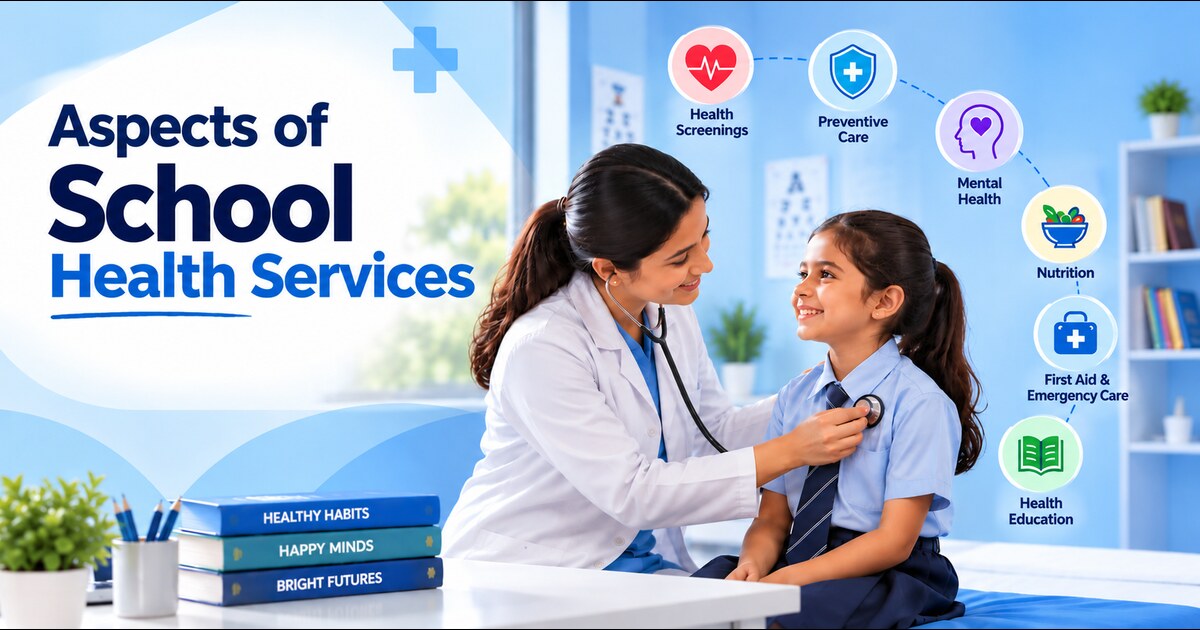
Regular school health services bring together several areas of care that support students’ physical, emotional, and social well-being. These aspects work collectively to prevent illness, identify concerns early, provide timely assistance, and promote healthy habits. The following components highlight the main ways schools can contribute to a safe, supportive, and health-conscious learning environment.
1. Health Appraisals & Screenings
Regular health assessments help identify potential concerns before they affect a child’s daily activities or academic performance. These may include monitoring height and weight, vision and hearing checks, dental assessments, and general physical examinations. Early identification allows parents and healthcare professionals to take appropriate action.
2. Preventive Services
Prevention is an essential part of maintaining student health. Preventive health services may include immunisation support, hygiene promotion, health check-ups, infection-control measures, and guidance on healthy lifestyle practices. These measures can reduce the risk of common illnesses and encourage children to develop healthier habits from an early age.
3. Emergency Care & First Aid
Children can experience injuries, sudden illness, allergic reactions, or other medical emergencies during school hours. Trained staff and properly equipped first-aid facilities can provide immediate assistance while further medical care is arranged when necessary. A clear emergency response plan helps schools respond quickly and appropriately.
4. Specialized Health Services
Some students may require additional healthcare because of allergies, chronic conditions, disabilities, or other individual needs. Specialised health services can help schools provide appropriate support, medication management, referrals, and care plans. This ensures that students can participate in school activities as safely and comfortably as possible.
5. Nutritional Services
Good nutrition supports children’s growth, energy levels, concentration, and overall development. School health programmes may provide nutritional assessments, healthy eating education, meal planning guidance, and support for students with specific dietary requirements. Teaching children about balanced nutrition can also encourage healthier food choices beyond school.
6. Mental Health Services
Students may face academic pressure, social difficulties, bullying, family challenges, or emotional concerns that affect their well-being. Mental health services can provide counselling, emotional support, stress-management guidance, and referrals when specialised care is needed. Creating a supportive environment also makes it easier for children to seek help without fear of judgement.
7. Health Education
Health education helps students understand how everyday choices influence their well-being. Age-appropriate lessons can cover hygiene, nutrition, physical activity, personal safety, emotional health, puberty, substance awareness, and disease prevention. Building health literacy early can help children make informed decisions as they grow.
8. Safe School Environment
A healthy school environment should protect students from preventable physical and environmental risks. Schools can focus on clean drinking water, sanitation, safe classrooms, proper ventilation, hygienic food practices, playground safety, and effective infection-control measures. A safe environment supports both physical health and a positive learning experience.
9. Digital Health Records & Monitoring
Digital health records can help schools maintain organised information about students’ screenings, vaccinations, allergies, medical needs, students health tracking and other relevant health details. With appropriate privacy and security measures, digital systems can make it easier for authorised staff and healthcare professionals to monitor health trends, coordinate care, and respond efficiently when support is required.
How Blue Circle Helps Schools Implement These Aspects
Implementing comprehensive school health services requires more than occasional medical check-ups. Schools need a structured system that brings preventive care, emergency support, health monitoring, and professional guidance together. Blue Circle helps educational institutions build an integrated school healthcare framework tailored to their students’ needs. Its approach can support regular health screenings, first-aid and emergency preparedness, specialist consultations, nutritional guidance, mental health support, and digital health record management.
By coordinating healthcare professionals and school teams, Blue Circle can help schools monitor student health more effectively and respond to concerns at the right time. This integrated model allows schools to make healthcare a consistent part of the learning environment while giving parents greater visibility into their child’s well-being.
Conclusion
School health services play an important role in creating a healthier, safer, and more supportive learning environment. From routine screenings and preventive care to nutrition, mental health, emergency support, and digital monitoring, each component contributes to students’ overall well-being. Understanding the different aspects of school health services also helps schools identify gaps in their existing healthcare approach and improve the support available to students. A structured school healthcare programme can encourage early intervention, promote healthy habits, and help children remain engaged in their education.
With the right healthcare partner, schools can move beyond basic medical assistance and develop a more comprehensive system that addresses students’ changing physical, emotional, and developmental needs.
FAQs
1. What are the main aspects of school health services?
Key areas include health screenings, preventive care, first aid, specialised services, nutrition, mental health, health education, safety, and digital health monitoring.
2. What is the difference between school health services and school health programmes?
School health services focus on direct healthcare support, while school health programmes take a broader approach by combining healthcare, prevention, education, safety, and wellness initiatives.
3. How often should school health check-ups be done?
The frequency depends on students’ age, health requirements, and school policies. Routine annual check-ups, along with additional assessments when needed, can support early detection.
4. What health problems are most common among school children in India?
Common concerns include vision problems, dental issues, nutritional deficiencies, respiratory infections, obesity, skin conditions, and mental or emotional health challenges.
5. Can private schools outsource their health services?
Yes. Private schools can partner with professional healthcare providers to manage services such as screenings, consultations, emergency care, health records, and preventive health programmes.