School-Based Mental Health Services: A Complete Guide for Indian Schools
Key Takeaways
- School-based mental health services provide counselling, screening, prevention, and professional support within schools.
- Early identification helps recognise changes in behaviour, attendance, academics, and participation.
- Effective programmes include counselling, mental health education, teacher training, parent involvement, referrals, and crisis protocols.
- Indian students may face academic stress, bullying, social pressures, and family challenges.
- These services support emotional well-being, coping skills, communication, and engagement.
- Blue Circle integrates mental health support with wider school health services.
Mental health plays an important role in how children learn, communicate, build relationships, and respond to challenges. Academic pressure, changing social dynamics, bullying, family concerns, and difficulties with emotional regulation can affect a student’s well-being and classroom participation. This makes mental health support an important part of the school environment.
Schools are uniquely positioned to identify early signs of emotional or behavioural difficulties because teachers and staff interact with students regularly. A structured approach can help recognise concerns early and connect students with appropriate support. School-based mental health services bring preventive education, counselling, screening, emotional support, and professional intervention closer to students. For Indian schools, developing such support systems can contribute to a safer, more inclusive environment where students feel comfortable seeking help when they need it.
What Are School-Based Mental Health Services?
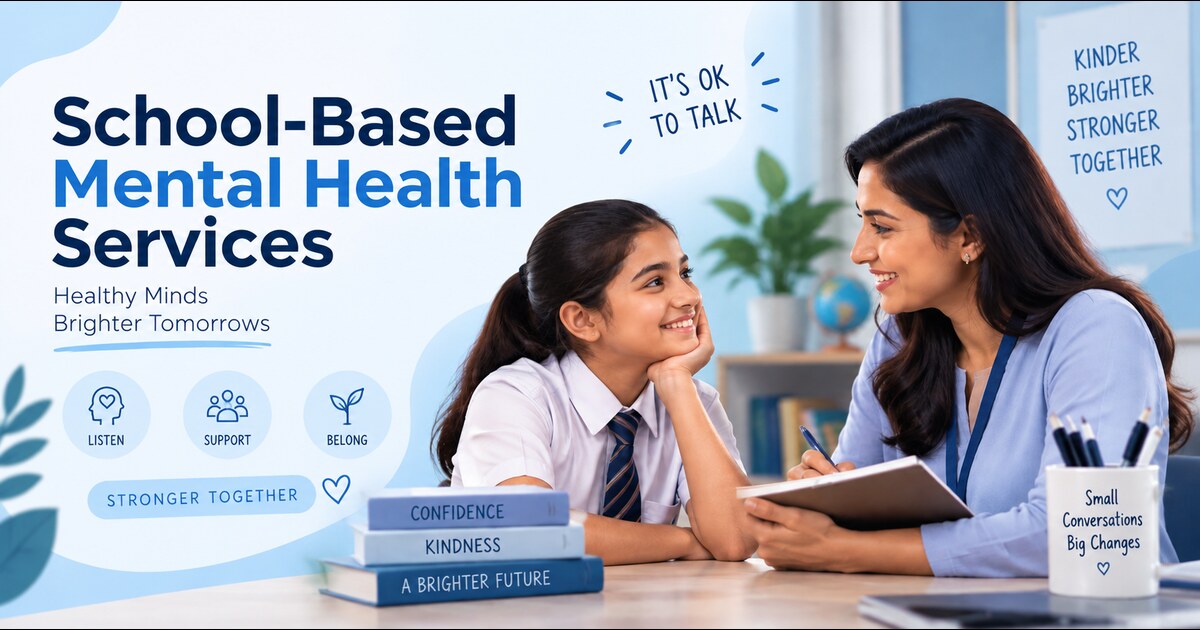
School-based mental health services are organised support systems designed to address students’ emotional, psychological, behavioural, and social well-being within the school setting. These may include counselling, mental health awareness sessions, psychological assessments, stress-management programmes, crisis intervention, and referrals to specialised professionals.
The purpose is not simply to respond when a student is experiencing a serious concern. These services can also focus on prevention and early intervention by helping children understand emotions, develop coping skills, manage stress, and build healthy relationships. Depending on the school’s requirements, support may be provided by counsellors, psychologists, healthcare professionals, teachers, or trained support staff.
When appropriately structured, these services can become part of a wider student wellness framework. They provide students with accessible support while helping teachers and parents recognise when professional intervention may be necessary.
Why Schools Play an Important Role in Student Mental Health?
Children spend a significant part of their day at school, making it an important environment for supporting their emotional and social development. Teachers and school staff may notice changes in behaviour, attendance, academic performance, friendships, or classroom participation that could indicate that a student is struggling.
Schools can also create opportunities for early conversations about stress, emotions, relationships, bullying, self-esteem, and other age-appropriate concerns. Providing access to trained professionals can help students receive support before difficulties become more disruptive to their education or daily life.
A supportive school culture can also reduce the hesitation some children may have about discussing emotional concerns. Mental health education, counselling, peer-support initiatives, and teacher awareness can collectively encourage students to seek help without feeling judged. This makes schools an important setting for promoting emotional well-being alongside academic development.
The Growing Need of School-Based Mental Health Services in India
The need for accessible mental health support in Indian schools is becoming increasingly important. Students may experience academic competition, examination stress, social pressures, bullying, family challenges, digital and social media influences, and difficulties adjusting to changing environments. Without appropriate support, these challenges can affect concentration, attendance, behaviour, relationships, and academic engagement.
Another concern is that mental health difficulties are not always easy to recognise. A student may appear withdrawn, irritable, distracted, or unusually quiet without openly expressing what they are experiencing. Schools therefore need systems that encourage early identification while respecting student privacy.
Developing school mental health programmes can help address these gaps by combining awareness, prevention, counselling, early intervention, and professional referrals. For Indian schools, such an approach can make mental health support more accessible and help create an environment where seeking assistance is viewed as a normal part of maintaining overall well-being.
What are the Types of School-Based Mental Health Services?
The type of support offered can vary depending on the school’s size, student population, available professionals, and specific requirements. Common types include:
1. Counselling Services
One-to-one or small-group counselling can help students discuss academic stress, relationships, emotional difficulties, behavioural concerns, or personal challenges in an appropriate and supportive setting.
2. Mental Health Screening
Age-appropriate screening and assessments can help identify students who may benefit from additional evaluation or professional support. Screening should be conducted responsibly and should not be treated as a diagnosis.
3. Psychological Support
Psychologists can provide professional assessment, therapeutic interventions, behavioural support, and guidance for students experiencing more complex emotional or psychological concerns.
4. Preventive Mental Health Programmes
Workshops and classroom activities can teach students about emotional awareness, coping skills, stress management, resilience, communication, and healthy relationships.
5. Crisis Intervention
Schools should have appropriate protocols for responding to serious emotional distress, self-harm concerns, abuse, or other mental health emergencies, including timely referral to qualified professionals and emergency services when required.
6. Parent and Teacher Support
Training and guidance can help parents and teachers recognise warning signs, respond appropriately, communicate with students, and understand when professional help may be needed.
What are the Key Components of an Effective School Mental Health Program?
An effective programme should take a comprehensive approach rather than relying solely on individual counselling. Some essential components include:
- Accessible counselling: Students should have a clear and confidential way to approach qualified counsellors or mental health professionals.
- Early identification: Teachers and staff should know how to recognise potential changes in behaviour, mood, attendance, or academic participation and follow appropriate referral processes.
- Mental health education: Age-appropriate sessions can help students understand emotions, stress, coping strategies, relationships, and when to seek support.
- Teacher training: Teachers can be equipped with basic awareness of mental health concerns while understanding the boundaries of their role and when to involve professionals.
- Parent involvement: Appropriate communication with parents or guardians can support continuity of care while maintaining student privacy and following safeguarding requirements.
- Referral pathways: Schools should have clear connections with qualified psychologists, psychiatrists, hospitals, and other specialised services for students who require support beyond the school setting.
- Crisis and safeguarding protocols: A well-defined process should be available for handling urgent concerns, protecting students, and arranging timely professional intervention.
What are the Benefits of School-Based Mental Health Services?
School-based mental health services can benefit students, teachers, parents, and the wider school community. One of the biggest advantages is early identification, as regular observation and professional support can help recognise emotional or behavioural concerns before they significantly affect a student’s education or daily life.
Accessible counselling can also help students manage academic pressure, stress, social difficulties, low self-esteem, and other age-appropriate challenges. Mental health education encourages children to understand their emotions and develop healthier coping strategies. These services can also improve communication between students, teachers, parents, and healthcare professionals.
For schools, a structured mental health programme can contribute to a more supportive and inclusive environment. When students feel emotionally supported and comfortable asking for help, they may be better positioned to participate in classroom activities, maintain relationships, and engage with their education.
How to Implement a Mental Health Program in Your School?
Implementing a school mental health programme requires planning, trained professionals, clear processes, and cooperation between different stakeholders. Schools can begin by assessing the existing needs of their students and identifying gaps in current support systems.
The next step is to establish access to qualified counsellors, psychologists, or other appropriate mental health professionals. Schools should also create clear procedures for referrals, confidentiality, parental communication, and handling urgent concerns. Teachers and administrative staff can receive basic mental health awareness training so they know how to recognise potential warning signs and respond appropriately.
Mental health education should also become part of the broader student wellness approach through age-appropriate workshops and activities. Regularly reviewing the programme can help schools understand what is working and where additional support may be required. A structured, student-centred approach can make mental health support more accessible and sustainable.
How Blue Circle Delivers School Mental Health Services
Blue Circle takes an integrated approach to school healthcare, helping educational institutions bring professional health support closer to students. Its school healthcare model can incorporate mental health support alongside other essential school healthcare services, allowing schools to address student well-being through a coordinated framework.
Mental health support can include access to appropriate professionals, counselling, awareness initiatives, early identification, and referrals when specialised care is required. By working with schools and their existing teams, Blue Circle can help create structured processes for addressing students’ emotional and psychological needs.
The approach can also support communication between relevant stakeholders while maintaining appropriate confidentiality and safeguarding practices. Rather than treating mental health as an isolated concern, integrating it into the wider school healthcare ecosystem allows institutions to consider students’ physical, emotional, and developmental well-being together.
Conclusion
School-based mental health services provide a structured way to combine prevention, awareness, counselling, early identification, and professional referrals within the school environment. However, an effective programme requires more than simply appointing a counsellor. It needs trained staff, clear referral pathways, safeguarding protocols, parent involvement, and a supportive school culture.
For Indian schools, integrating mental health into a broader healthcare framework can help create an environment where students feel heard, supported, and comfortable seeking help. With Blue Circle, schools can build a more integrated approach to student healthcare, bringing mental health support together with other essential school health services.
FAQs
1. What are school-based mental health services?
School-based mental health services provide students with accessible support such as counselling, psychological assessments, mental health education, early intervention, and referrals to specialised professionals when required.
2. Why are mental health services important in schools?
They help identify concerns early, support emotional well-being, manage stress, and create a safer environment where students can seek help without feeling judged or isolated.
3. Is a counsellor mandatory in CBSE schools in India?
Yes. CBSE has provisions requiring affiliated schools to have qualified counselling and wellness support. The specific staffing requirements may vary based on applicable CBSE rules and school category.
4. What mental health issues are most common among school students in India?
Students may experience academic stress, anxiety, low mood, behavioural difficulties, bullying-related distress, low self-esteem, social challenges, and difficulties coping with family or peer-related concerns.
5. How do schools identify students who need mental health support?
Schools can identify concerns through teacher observations, counselling sessions, behavioural changes, attendance patterns, academic difficulties, student self-referrals, screening tools, and communication with parents.
6. How much do school-based mental health services cost in India?
Costs vary depending on the services, number of students, professional expertise, and programme structure. Schools may choose individual counselling, periodic consultations, or comprehensive healthcare partnerships based on their needs.